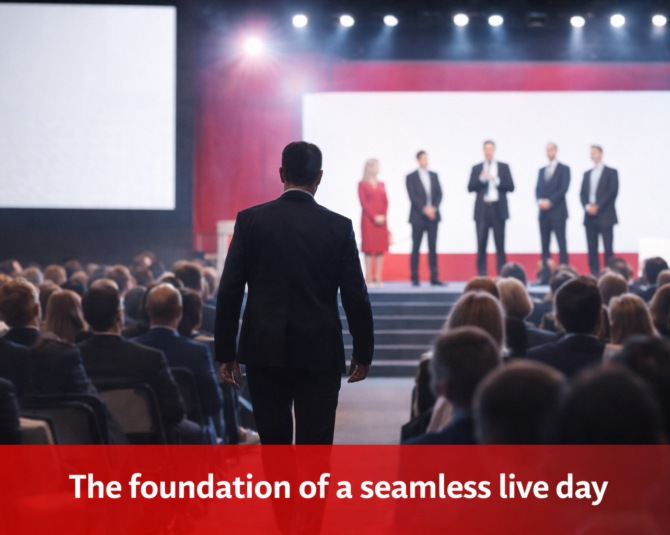
The live day gets the attention, but the weeks beforehand determine whether everything comes together.
Behind the built: 10 weeks to go-live
When people think about organising an event, they often picture the live day. The stage is built, guests are arriving, speakers are getting ready backstage and the exhibition floor is filling up. That's the visible part.
For us, the real work starts much earlier.
Around eight to ten weeks before go-live, we move from ideas to practical planning. This is where we make the decisions that will shape the rest of the project. Some are big, like confirming suppliers or finalising the programme. Others seem small at first, but can have just as much impact on the event itself.
From ideas to decisions.
Every project starts with objectives, ideas and plenty of discussions. At some point those conversations have to become a plan that everyone can work with.
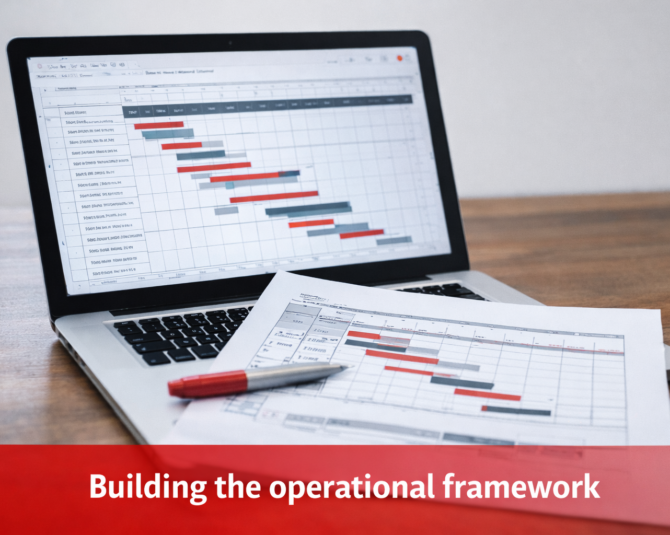
We sit down with the client's marketing manager and event lead to review the programme, the venue, the budget and the overall timeline. We look at what has already been agreed, what still needs to be decided and where we might run into challenges later in the project.
We've learned that asking the difficult questions early almost always saves time later.
Getting everyone on the same page.
One thing we've seen over the years is that different teams naturally look at an event in different ways. Marketing focuses on the visitor experience, production looks at technical feasibility, sponsors have commercial objectives and venue teams think about logistics.
None of those perspectives are wrong, but they do need to come together.
That is why we organise alignment sessions well before build-up starts. Everyone knows what is expected, who is responsible for which decisions and how we communicate if something changes. It sounds straightforward, but it prevents a surprising number of issues during the final weeks.on.

Looking beyond the floorplan
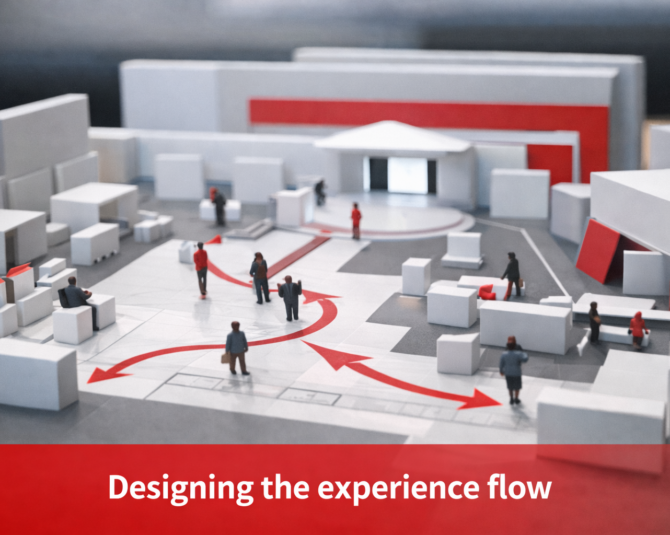
A floorplan is never just about where the stage or exhibition stands are placed.
We use it to walk through the event from the visitor's perspective. How do people enter the venue? Will registration cope with the morning rush? Is there enough space around the coffee points? Does the exhibition naturally attract visitors between sessions? Where will senior executives move through the venue and how do we avoid unnecessary bottlenecks?
These are the details guests rarely notice, but they definitely notice when they haven't been considered.
Sponsors, speakers and senior stakeholders
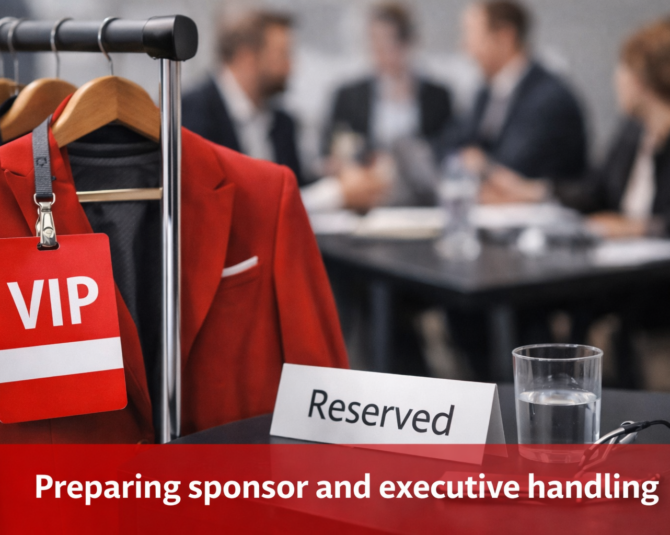
Sponsors, speakers and senior stakeholders all have different expectations, but they have one thing in common. They need to feel confident that everything has been thought through before they arrive.
For sponsors, that starts with the practical side. Stand locations, branding deadlines, technical requirements and exhibition logistics all need to be clear well in advance. We also look at how they fit into the overall event. Is the exhibition layout working? Does the programme create enough opportunities for visitors to spend time on the exhibition floor? Are there moments where sponsors can increase their visibility?
For speakers and senior executives, the focus is on making their day as straightforward as possible. We coordinate arrival times, backstage logistics, presentation requirements and meeting schedules, so they can concentrate on delivering their session or speaking with customers and colleagues.
Every event is different, but the goal is always the same. The people representing your brand should never have to think about the logistics. That's our job.
The foundation of a seamless live day
One of the biggest advantages of doing this work early is that the final weeks become exactly what they should be: a period for fine-tuning rather than solving problems.
There will always be last-minute changes. A speaker may adjust a presentation, a sponsor might request something extra or attendance numbers could increase. That's normal. The difference is that those changes sit on top of a solid plan instead of replacing one.
When the doors finally open, our job is to keep everything running smoothly. That is only possible because so much of the work has already been done.
For us, that is what 'Behind the Built' is all about.